Roofs do not fail overnight. They tell you what is happening long before water reaches your ceiling, and the homeowners who catch those messages early are the ones who spend less, wait less and worry less. An upgrade is not simply a cosmetic surface on top of your house — it is the layer that decides how dry, cool and quiet everything beneath it stays.
Reading the early signals
Start with what you can see from the ground and what you can hear from inside. Most of the clues are small, repeatable and easy to note down for your contractor.
- Granules in the gutters. Shingles shed their protective coating as they age. A thin dusting is normal after a storm; a steady stream of grit points to a surface nearing the end of its service life.
- Curling or lifting edges. Heat, wind and moisture push shingles out of plane. Once edges lift, water finds the path underneath them.
- Daylight or damp staining in the attic. A beam of light through the roof deck, or dark rings on the sheathing, means moisture is already inside the assembly.
- Ceiling shadows after heavy rain. A faint brown bloom on an interior ceiling is the last warning in a long chain.
What a proper upgrade actually involves
An upgrade done well is an inspection before it is ever a surface. Our crews begin with the full assembly: deck condition, flashing at valleys and penetrations, ventilation balance, and the gutters that carry it all away.
A roof is a system — surface, underlayment, flashing and ventilation working together. Replace only the shingles and you simply restart the clock on the weakest part.
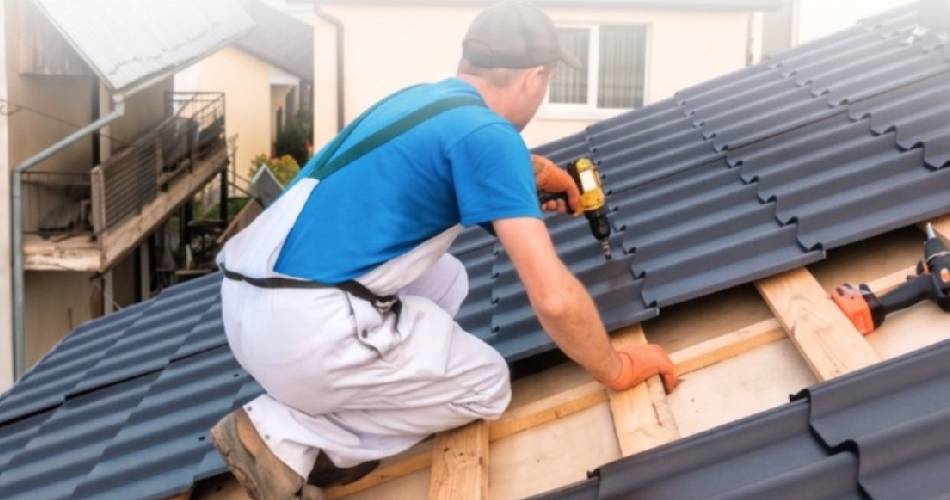
From there, the sequence matters as much as the materials. Deck repairs and moisture checks come before anything else, then underlayment, then edge metal, then shingles laid to the manufacturer's specified pattern. Ventilation is balanced so the attic can breathe, because trapped heat quietly ages the assembly from the inside.
Materials that make sense for a coastal climate
Sun, humidity, salt air and afternoon storms all pull in different directions. Architectural shingles and standing-seam metal both perform well here, and the right choice usually comes down to roof pitch, how long you intend to stay, and how much weight the structure can take. A good contractor will explain the trade-offs rather than steer you to the easiest install.
Protecting what sits underneath
The real value of an upgrade shows up in the rooms below: no more damp patches above the stairwell, steadier attic temperatures, less strain on the air conditioning, and a deck that stays sound instead of spongy. Insurers and inspectors also tend to look more kindly on a documented, professionally installed roof when the next storm passes through.
Planning the work around your household
Roofing is loud and it is overhead, so the schedule deserves care. Most upgrades suit dry mornings, staged deliveries and a clear path for the crew, with gutters and ground clean-up at the end of each day. Ask your contractor how the site will be protected, how materials will be lifted, and what happens if weather interrupts the run.
If you are unsure whether your roof needs attention this season or next, bring us the small details: the granules, the stains, the sound of a heavy downpour. That conversation costs nothing and usually saves a great deal.